The armory and what we have verified
There are eight weapon types in the current official Google Play description: Great Sword, Long Sword, Dual Blades, Hammer, Lance, Bow, Heavy Bowgun, and Charge Blade. That listing was updated October 20 and checked October 29, 2026. The official site’s named Adventurer profiles cover seven of those weapon families. The difference is useful: a roster page is not necessarily a complete armory list.
Charge Blade is therefore officially listed for launch. We have not verified its live-client move tree, availability on a particular account, or matchup performance. It stays unranked here. A public store description establishes inclusion; it does not substitute for a hands-on test. Read the Charge Blade note before treating an older seven-weapon guide as current.
This page ranks beginner suitability and investment focus, not maximum damage. No timed clear dataset, controlled live build comparison, or launch balance test was run for this edition. A weapon can be demanding yet rewarding, and a weapon that is comfortable for one player can be awkward on another player’s device. Use the board to choose what to practice, then evaluate the result against your own repeatable hunts.
Read the suitability board correctly
Our A label means a useful first comparison for the stated learning goal. B means a more specific timing or positioning demand deserves attention before you commit scarce materials. These are editorial opinions dated October 29, 2026. They are not CBT community rankings, speedrun tiers, rarity grades, or a promise that A will outdamage B in the current client.
| Weapon | Suitability | Primary learning question |
|---|---|---|
| Great Sword | A for deliberate opening practice | Can you charge only when the opening is long enough? |
| Long Sword | B for timing-focused learners | Can you maintain awareness while managing Spirit? |
| Dual Blades | A for mobile melee practice | Can you stop pressure while an escape is still available? |
| Hammer | B for position-focused learners | Can you reach the useful angle without trading hits? |
| Lance | A for guard-led learning | Can you defend deliberately and reset after pressure? |
| Bow | A for mobile ranged learning | Can you aim while keeping the next threat in view? |
| Heavy Bowgun | B for planned firing practice | Can you leave a firing sequence before it becomes unsafe? |
| Charge Blade | Unranked pending client checks | What does the current move list actually ask you to manage? |
Do not add the labels together to choose a team. Four A-labeled weapons do not automatically cover recovery, status handling, or useful target access. Adventurer-specific kits and player habits can matter more than the family name. Start with the role your group needs and the action you can perform consistently, then use the team planner to expose missing jobs.
Great Sword: spend an opening deliberately
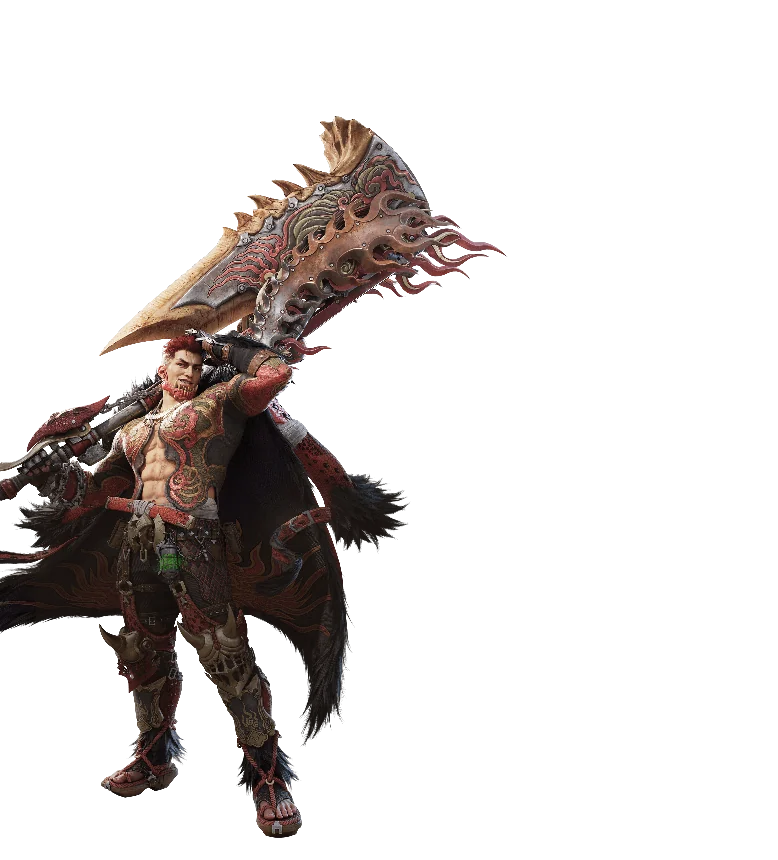
Great Sword rewards deciding where a monster will be when your committed attack finishes. The official February overview demonstrates charge-based power, defensive choices, and evasive charge continuity. That is pre-launch evidence of the weapon’s intended rhythm, not proof of an unchanged launch frame count. We deliberately avoid prescribing an exact rotation from that video.
For a first drill, choose a recognizable attack the monster completes without immediately moving again. Stand where the follow-up is visible, use a modest punish, and leave. Only extend the commitment after you can repeat that sequence without damage. If the target consistently turns before your heavy hit lands, starting earlier may be the wrong fix; you may need a shorter attack or a different opening.
Great Sword’s biggest beginner trap is treating an almost-complete charge as a debt the monster must honor. An unsafe final hit can cost more time through healing and repositioning than it contributes. Learn the action that cancels or exits the current state in your selected control scheme. When you cannot identify an exit, treat the move as a commitment to practice in a safer encounter.
Named kits need a second layer of reading. Pyro and Luxheart share a weapon family but have different resource identities. Do not import a damage-taking or stance mechanic from one to the other. The Great Sword page separates basic opening practice from those Adventurer choices.
Long Sword: attention is a resource
Long Sword’s published overview connects Spirit Gauge management with movement and timed counterattacks. The key learning challenge is divided attention. You need to read the monster while understanding what your current resource state permits. A player staring at a gauge can miss the exact tell that would have made a counter useful.
Start with ordinary positioning and a short safe attack. Add one counter interaction only after you recognize the whole incoming sequence. A successful response to the first hit does not establish safety against a later hit in the same string. When a counter fails, record whether the cause was timing, orientation, resource state, or an unsuitable attack interaction.
Do not assume that every mainline technique, invulnerability interval, or input sequence carries across unchanged. The current client and its skill descriptions determine your available options. Build a small sequence that works in your chosen controls and add complexity only when you can explain why it remains safe. An imperfect short loop you can repeat is a stronger foundation than a copied combo that only works in an ideal demonstration.
Midori and Ryunosuke are officially paired with Long Sword but have separate kit hooks. Gauge acceleration and a food-linked stance concept change what you watch during the hunt. Read the Long Sword guide before deciding that a character’s class alone determines its playstyle.
Dual Blades: leave something in reserve
Dual Blades appeal to players who like frequent movement and sustained close pressure. The danger is that a fluid combo can hide how much freedom you have already spent. Watch the resource needed for the next defensive action, not only the resource that enables the current damage sequence. Your stopping point should leave an escape you can execute, not a theoretical escape you could have afforded several inputs ago.
Practice moving beside the target after a short sequence instead of always pursuing its front. When a monster turns, reassess whether the side you chose remains safe. Rapid movement does not make every position interchangeable. If the camera gets trapped under a large body or against scenery, disengage and restore visibility before starting another full sequence.
The named Dual Blades roster spans Raya, Keres, and Haze. Their class labels and mechanics are not identical. A fast weapon is not automatically a damage-only kit, and a Disruptor label is not evidence that every attack applies a guaranteed interruption. Check the effect you actually plan to contribute.
For a first investment, find out whether you enjoy managing this rhythm under pressure. If you repeatedly finish attacks with no defensive resource, shorten your sequence before spending on more offense. The Dual Blades page gives a short resource-awareness drill and questions for comparing those three named kits.
Hammer: earn useful access
Hammer’s practical challenge is reaching a productive angle while a monster is still moving. It can be tempting to run directly to a familiar target part and begin charging without regard to the next attack. Instead, learn the route into the opening and the route back out. Access that costs an emergency heal is not dependable access.
Treat a head-focused practice plan as a positioning exercise, not a promise of a fixed knockout. We do not publish launch stun thresholds, a guaranteed number of hits, or part-specific damage values in this edition. If an interruption occurs, notice the circumstances without assuming that the same short sequence will force it again after an unknown threshold changes.
Rhodes adds an officially described energy and charge identity. Read how that resource is gained and spent in the current character sheet before making a burst plan. An energy mechanic is only helpful if you can maintain the positions that build it. Learn the weapon’s movement costs first, then investigate the character-specific payoff.
Choose Hammer if its deliberate close-range decisions feel good to you, even though our beginner board marks it B. The label highlights the learning demand. It does not mean the weapon lacks a place in a group, and it should not override a player who already understands the target’s head movement. Continue to the Hammer notes for a practical approach.
Lance: defense still has a timing problem
Lance offers a useful way to study pressure through a defensive lens. A guard-led learner can pay attention to where an attack comes from and when pressure ends. However, guard should not be treated as an automatic answer to every move. Orientation, resources, current skills, and attack properties still matter; we have not verified a universal live guard interaction table.
Practice a small cycle: face the threat, use the available defensive response, confirm the sequence is over, then make a short punish. Do not hold offense through the next tell merely because the previous hit was blocked. If the target passes behind you, recovering your facing can be more valuable than one additional thrust.
Compare Arkaya with Ouyang Varen only after reading their separate resource descriptions. The first has a Support label and a Resolve/shield concept; the second has an Assault label and Impetus. That does not justify assuming that Arkaya protects the whole squad or that Ouyang has no defensive value. Check recipients and conditions, not just labels.
Lance’s A suitability label is for structured defensive learning, not guaranteed safety. If you dislike its movement rhythm, another weapon with a clear dodge plan may help you learn faster. The Lance page explains how to make the trial useful without treating a shield as a substitute for reading the monster.
Bow: range gives perspective, not immunity
Bow is a valuable comparison when you need a wider view of the encounter. The official April overview describes movement, gauge development, and charged opportunities. Those features can make the combat rhythm appealing, but ranged play still demands aiming, resource awareness, and attention to attacks that travel toward you. Standing farther away does not establish a safe position by itself.
For practice, keep a single target area visible while moving. Make a short firing sequence, reposition, and recover your aim. If every evasive input sends the camera somewhere you cannot manage, simplify the movement pattern before judging the weapon’s damage. Consistency depends on how quickly you can reacquire a useful angle after the monster moves.
Luka and Madelyn demonstrate why weapon and Adventurer rankings must be separate. A precision-oriented Assault kit and a medicine/Spore Support kit ask different questions of the same ranged player. The presence of a support skill also does not remove the need to keep landing useful attacks or remain where allies can benefit.
Use Bow if you enjoy controlling space and aiming through movement. Do not choose it exclusively to avoid learning melee tells: those tells still help you recognize incoming pressure and safe healing windows. Read the Bow guide for a practice sequence that checks accuracy and survival together.
Heavy Bowgun: choose a lane before a burst
Heavy Bowgun practice starts with where the target is likely to go while you remain committed. A clean line at the first shot can become unsafe as the monster turns, advances, or sends pressure toward your group. Identify the exit before the firing sequence. If the only plan is to finish shooting faster than the monster reaches you, shorten the sequence until the plan is repeatable.
The officially profiled named option is Pepper, whose description includes airborne firing. Do not interpret time in the air as confirmed invulnerability. Investigate the recovery and landing state, then decide which openings are long enough for that sequence. Any unverified attack interaction should have a ground movement fallback.
We do not publish ammunition economy, reload timings, or a live damage ranking here. Those details need the current move list and controlled testing. A practical first test is whether you can fire, stop, move, and regain a useful angle without losing track of the target. If that cycle feels awkward, further offense investment may not fix the underlying mismatch.
Heavy Bowgun’s B label flags planning demands. It is not a judgement on an experienced ranged player’s contribution. See the Heavy Bowgun page for questions that separate a safe firing position from a temporary gap in the action.
Charge Blade: inclusion is confirmed, strength is open
The store listing is sufficient to include Charge Blade in the armory. It is not sufficient to publish a launch rotation, phial formula, guard-point window, equipment recipe, or Adventurer pairing. Those details are deliberately absent until we can verify the actual client. We also do not assign another game’s Charge Blade mechanics to Outlanders merely because the name is familiar.
If you unlock it, start by reading its current move explanations and resource display. Identify a basic attack, a defensive option, a resource-building action, and the cost of a committed finisher. Test each in a safe context before chaining them. The first useful question is whether you understand the transitions the current game actually implements.
Keep a familiar fallback weapon while doing that investigation. An unverified new weapon can be exciting without needing to carry your first difficult Radiant attempt. Record the client version, control scheme, and any unlock condition before sharing a result. A clip without those details is context, not proof of a universally available launch build.
Separate weapon skill from account investment
A weapon trial should be cheap enough that you can change your mind. Avoid upgrading every family in parallel simply to complete the directory. First decide which rhythm you enjoy, then fund a meaningful step for the weapon you use most. Build a second option when it solves a specific problem, such as maintaining target access in a matchup where your first option repeatedly loses uptime.
Keep the Fated Adventurer distinction visible. Named Adventurers have fixed published weapon pairings and their own kits; the customizable protagonist is discussed in reporting as the flexible gear path. A strong basic weapon habit can transfer between contexts, but character-specific resource behavior still needs separate practice.
When an upgrade is expensive, compare the complete cost against the improvement it can deliver before your next few hunts. Does it finish a current step? Does it consume a shared bottleneck needed by essential equipment? Are you investing in a weapon you have actually used under pressure? The materials guide turns those questions into a bounded queue.
A fair weapon trial
Use the same manageable target, comparable preparation, and the same goal for each candidate. Record three outcomes: whether you finished safely, which attack repeatedly hit you, and how easily you could return to useful damage after moving. A single fast clear is not enough to rank a weapon if it depended on unusually favorable monster behavior.
Change one variable at a time. If you switch character, Buddy, gear level, controls, and weapon together, the result cannot isolate weapon suitability. It can still tell you which complete setup felt more comfortable, but describe it honestly as a setup comparison. For a group, ask whether the chosen weapon lets you perform the job you agreed to do.
We will only replace these editorial suitability labels with a stronger performance claim when there is evidence to support it. That would require comparable live builds, recorded settings and versions, multiple attempts, and a clear definition of the measured outcome. Until then, a transparent practice recommendation is more useful than a confident letter with no test behind it.
Weapon questions
What is the best weapon for a beginner?
Choose the weapon whose attack, defense, and recovery you can repeat comfortably. Our A suggestions are Great Sword for deliberate openings, Dual Blades for resource-aware mobility, Lance for guard-led learning, and Bow for mobile ranged practice. None is a universal winner.
Is Charge Blade in Monster Hunter Outlanders?
The official Google Play description lists Charge Blade among eight weapons. We have not verified its live unlock, move list, or strength in the client, so it remains unranked.
Does a character tier replace a weapon tier?
No. A weapon describes a family of combat decisions; an Adventurer adds a fixed pairing and specific kit. Evaluate both against the hunt and your ability to use them.
Are these CBT damage rankings?
No. The board is original editorial suitability advice dated October 29, 2026. Pre-launch official videos are labeled by date, and no CBT community tier list has been copied or relabeled as launch testing.